


Mindfulness Techniques for Morning Anxiety Relief

Last Updated: October 23, 2026
Quick Summary
To relieve morning anxiety, run a timed 15-minute routine before touching your phone: five slow breaths with a longer exhale, a quick body scan, 5-4-3-2-1 grounding, a five-minute brain dump, and one intention. Settle the body first, then direct attention, then think, because morning anxiety is a cortisol-driven stress response rather than a character flaw.
Take five slow breaths, inhaling for about four counts and exhaling for six to eight.
Name tension from jaw to shoulders to stomach to hands without trying to fix it.
Ground with 5-4-3-2-1: five things seen, four touched, three heard, two smelled, one tasted.
Write one page for five minutes with a timer so journaling doesn't become rumination.
Track recovery time in minutes and avoidance, not whether anxiety showed up.
Table of Contents
Why Morning Anxiety Hits Before You're Even Awake
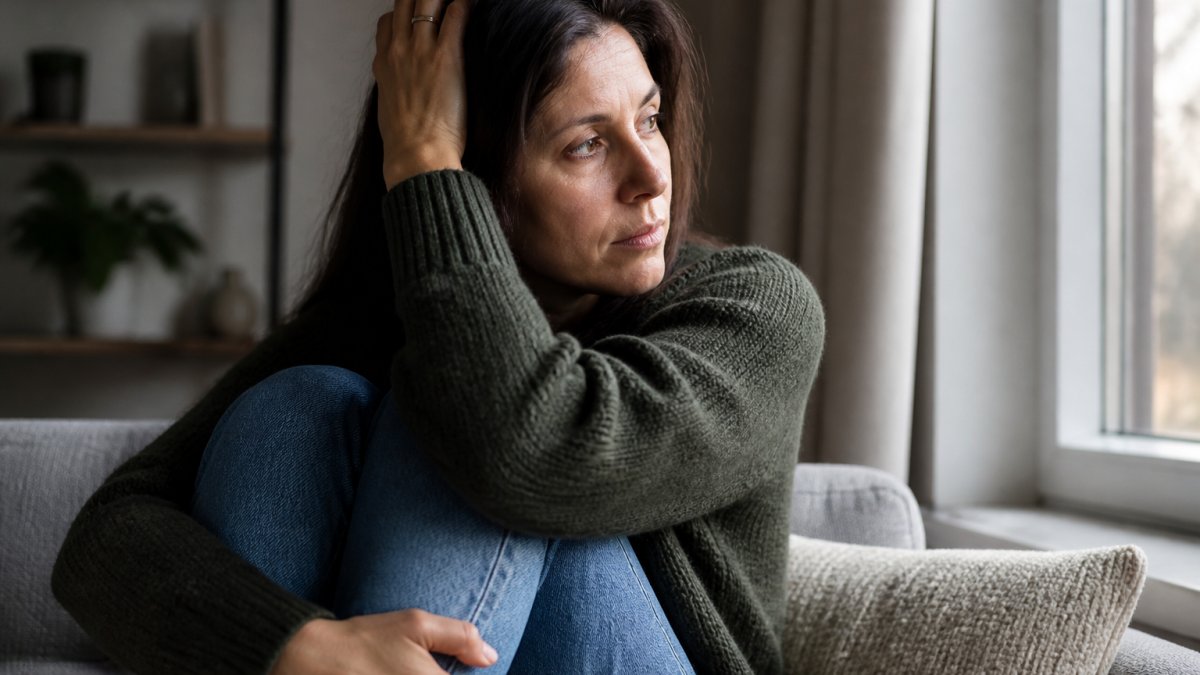
Morning anxiety is the rush of dread, racing thoughts, or physical tension that shows up in the first minutes after waking, often before you've had a single conscious thought. We see this pattern constantly in clients who are otherwise functional adults.
The cause is largely chemical. Your body releases cortisol in a burst shortly before waking, a natural part of the sleep-to-wake transition.
That distinction matters.
A Timed Morning Anxiety Routine for the First 15 Minutes
Here is a practical sequence you can run before you touch your phone. The goal isn't to eliminate anxiety. It's to interrupt the spiral before it sets the tone for the day.

Minutes 0-2: Stay still and breathe. Keep your eyes closed if that feels comfortable. Take five slow breaths with a longer exhale than inhale, in through the nose for about four counts, out through the mouth for six to eight. The extended exhale is the active ingredient; it nudges your nervous system toward the parasympathetic branch responsible for calm. If closed eyes make you edgy, keep them open and soften your gaze.
Minutes 2-5: Do a quick body scan. Move attention slowly from jaw to shoulders to stomach to hands. Notice where tension lives without trying to fix it yet. Naming the location, "jaw clenched," "shoulders up", is itself a mindfulness rep, because it pulls attention out of the future and into physical sensation.
Minutes 5-8: Ground with your senses. Name what you can see, hear, and feel. The 5-4-3-2-1 method works here: five things you see, four you can touch, three you hear, two you smell, one you taste. This is the step that breaks the worry loop, because your senses only report "what is," not "what if."
Minutes 8-12: Write one page. Empty the worry loop onto paper without editing. Set a timer so the brain dump doesn't turn into 30 minutes of rumination on paper. Five minutes is enough to move the loop out of your head.
Minutes 12-15: Set one intention. Choose a single word or phrase for the day, "steady," "one thing at a time," "show up", not a to-do list. An intention is a direction, not a task, and it gives the morning a frame that isn't threat-based.
A common mistake is skipping the body and going straight to problem-solving. The body is already activated; settle it first, then think. Many individuals find the first two minutes alone change the tone of the entire morning.
Match the Technique to Your Symptom
Not every morning calls for the full 15 minutes, and not every symptom responds to the same step. Use this quick decision guide:
Racing thoughts or worry loops: Start at step 4 (journaling) or step 3 (grounding). Writing and sensory naming interrupt the loop faster than breathwork when the mind is the loudest channel.
Physical tension, tight jaw, shoulders, stomach: Start at step 2 (body scan) and add gentle movement such as rolling your shoulders or stretching your neck before step 3.
Panic-like sensations, heart pounding, shallow breath: Skip the body scan and go straight to the extended exhale in step 1, then step 3 with eyes open. Closed-eye, inward-focused practice can escalate panic for some people.
Adapt the Routine to Your Morning
The 15-minute version is a template, not a rule. Adapt it to your body and your circumstances:
Mobility limitations: Do the body scan seated or lying down, and substitute hand or ankle rolls for full-body stretching. Grounding through touch works the same whether you're standing or seated.
Caregiving duties or early shifts: Run steps 1 and 3 in the two minutes before anyone else is awake, and save journaling for a lunch break. Partial routines still count.
Discomfort with closed-eye meditation: Keep your eyes open and focus on a single object, a lamp, a window, your own hand, during the breathing step. Open-eye anchoring is a legitimate mindfulness practice, not a workaround.
Pro Tip Keep a journal and pen on your nightstand, not in a drawer. The friction of finding it is enough to break the habit on hard mornings.
Breathing Exercises for Anxiety That Calm the Nervous System Fast
Breathing exercises for anxiety work because slow, extended exhales activate the parasympathetic branch of your nervous system, the part responsible for calm. It's the fastest lever you have, and it's free.
Box Breathing and Extended Exhale
Box breathing is a four-count pattern: inhale for four, hold for four, exhale for four, hold for four.
The extended exhale is often more effective for acute anxiety. Inhale through your nose for four counts, then exhale slowly through your mouth for six to eight counts.
Try both and notice which one your body prefers. Some people find holds triggering when anxious, in which case skip box breathing and stay with the extended exhale.
Grounding Techniques for Anxiety: Coming Back to the Present Moment
Grounding techniques for anxiety are methods that redirect attention from future-focused worry to present-moment sensory input. They work because anxiety lives in "what if," and your senses only report "what is."
The simplest version is 5-4-3-2-1: name five things you can see, four you can touch, three you can hear, two you can smell, and one you can taste. Say them silently or out loud. Another option is pressing your feet firmly into the floor and describing the sensation in detail. For a deeper look at how the stress response works, the National Institute of Mental Health's overview of anxiety disorders is a solid, plain-language starting point.
Grounding isn't distraction. It's a deliberate return to the present moment, and it gets faster with repetition.
The 3-3-3 Rule for Anxiety: A Portable Reset
The 3-3-3 rule for anxiety is a quick grounding method: name three things you can see, three sounds you can hear, and move three parts of your body. It takes under a minute and works anywhere, which is why it's one of the most portable tools we teach.
Use it in the parking lot before a meeting, at the kitchen counter, or in bed when your mind starts racing. The movement component matters.
The rule isn't magic. Its value is that it's simple enough to remember mid-panic, when complex instructions vanish from memory.
Managing Racing Thoughts and Worry Loops After Waking
Racing thoughts and worry loops feel urgent but are rarely productive. The goal isn't to stop thoughts. It's to stop feeding the loop.
Thought Labeling and Journaling
Thought labeling means naming the thought type without arguing with it: "that's a worry about work," "that's a memory," "that's planning." This small act of self-awareness creates distance between you and the thought.
Journaling works best as a brain dump. Set a timer for five minutes and write every worry without editing. When the timer ends, close the notebook.
A common mistake is journaling for 30 minutes and turning it into rumination on paper. If you want to go deeper on the research behind these approaches, Harvard Health's coverage of mindfulness and anxiety is worth reading.
When a Mindfulness Exercise Makes Anxiety Worse
Sometimes breathwork or a body scan increases distress instead of easing it. This is more common than most guides admit, and it doesn't mean you're doing it wrong.
If a practice makes you more anxious, stop. Try a grounding technique with your eyes open instead, or switch to mindful movement such as a slow walk or gentle stretching. People with trauma histories sometimes find closed-eye, inward-focused practices destabilizing, and that's a known response, not a personal failure.
Watch Out Forcing yourself through a meditation that's escalating your anxiety can deepen the association between stillness and fear. If a technique consistently makes things worse, set it aside and choose an outward-focused alternative.
If morning anxiety is persistent, intense, or paired with physical symptoms that don't ease, it's worth talking to a licensed professional. Self-help has limits, and knowing where they are is part of using it well. The Substance Abuse and Mental Health Services Administration's treatment locator can help you find qualified support.
Measuring Progress Without Expecting Anxiety to Disappear
The wrong way to measure progress is asking, "Am I anxiety-free yet?" That bar guarantees you'll feel like you're failing. The right way is tracking how quickly you recover, how often you use your tools, and whether the mornings are getting more manageable over weeks, not days.
What to Track | How to Measure It | Realistic Sign of Progress |
Recovery time | Minutes from waking to feeling steady | Shrinking from 60 minutes to 20 |
Tool use | How often you run the routine | More automatic, less forced |
Morning intensity | Rate 1-10 each morning | Fewer 8s and 9s over a month |
Avoidance | Tasks you no longer dread | More mornings you start without dread |
What Each Metric Actually Tells You
Recovery time is the most useful single number. Anxiety may still show up, but if the gap between waking and feeling steady shrinks, the nervous system is learning to settle faster. Track it in minutes, not in whether anxiety appeared at all.
Tool use measures habit strength, not willpower. The goal is for the routine to become automatic enough that you reach for it without negotiating with yourself. A morning where you run two of the five steps still counts.
Morning intensity on a 1-10 scale captures the felt experience. Look for a downward trend over a month, not day-to-day changes. A single 8 after a week of 5s is noise, not failure.
Set Expectations That Hold Up
Morning anxiety often responds to consistent practice over weeks, not days. A realistic expectation is that the routine becomes easier to run and recovery gets faster before the anxiety itself fades.
Daily consistency matters more than intensity. Five minutes every morning beats a 30-minute session once a week. And self-compassion is not a soft add-on; it's what keeps you coming back to the practice on the mornings it doesn't work.
When Progress Stalls
If two to three weeks of consistent practice produce no change in recovery time or avoidance, adjust before you abandon. Try a different entry point from the symptom-matching guide, for example, swap breathwork for grounding if breathwork feels agitating. If the routine consistently increases distress, or if morning anxiety is paired with physical symptoms that don't ease, it's worth talking to a licensed professional. Self-help has limits, and knowing where they are is part of using it well.
Key Takeaway Track recovery time and avoidance, not whether anxiety showed up. A morning that starts anxious but steadies in 20 minutes is progress, even if the first minute felt awful.
At Alive Hypnotherapy, we work with people whose anxiety hasn't responded to talk therapy alone. Our hybrid approach combines CBT, NLP, and hypnotherapy to find and rewire the subconscious patterns underneath the morning spiral, rather than only managing symptoms. Clients often tell us the shift is about finally feeling in control, not just calmer. You can read more about our approach and the science of hypnotherapy from the American Psychological Association if you want the research context.
Frequently Asked Questions
What causes anxiety as soon as you wake up?
Morning anxiety often comes from the body's natural cortisol surge, which peaks in the first 30 to 60 minutes after waking. Cortisol is your alertness hormone, and when baseline anxiety is already high, that spike can feel like dread before you've even had a thought. Anticipating the day, poor sleep, and an irregular wake time make it stronger. The good news is that a short mindfulness practice during that window can interrupt the stress response before it builds.
What is the 3-3-3 rule for anxiety, and how do you use it?
The 3-3-3 rule for anxiety is a grounding technique that pulls attention out of racing thoughts and into your senses. Name three things you can see, three sounds you can hear, and three parts of your body you can move or feel. Do it slowly, one at a time. It works best when you notice early signs of a worry loop, such as a tight chest or shallow breathing. Keep it in your morning anxiety routine as a quick reset between other practices.
How long should a morning mindfulness routine take?
Five to ten minutes is enough to see a difference, especially at the start. A practical structure: one minute of slow breathing, two to three minutes of a body scan, and two minutes of setting an intention or journaling. Consistency matters more than length, so a daily five-minute practice beats a 30-minute session once a week. If mornings are rushed, split it up: breathwork before you get out of bed, grounding while the coffee brews, and a short visualization before you open your laptop.
When should I seek professional help for morning anxiety?
Talk to a professional if morning anxiety persists most days for several weeks, disrupts sleep or work, or comes with panic symptoms like a racing heart, nausea, or feeling detached. Self-help techniques are useful tools, but they are not a substitute for care when anxiety is chronic or treatment-resistant. A practitioner trained in nervous system regulation and subconscious work can help you address the root pattern rather than only managing symptoms each morning.

Comments