


_edited.png)
Hypnotherapy for Treatment-Resistant Anxiety

Table of Contents
What Is Hypnotherapy for Treatment-Resistant Anxiety?
How Hypnosis Works to Address Anxiety at the Root
How to Rewire Subconscious Beliefs Driving Your Anxiety
Nervous System Regulation Techniques in Hypnotherapy
Hypnotherapy Success Rates for Anxiety: What the Research Shows
Hypnotherapy vs. Talk Therapy: Why Traditional Approaches Fall Short
What to Expect During Your First Hypnotherapy Session
Frequently Asked Questions
Last Updated: September 25, 2026
What Is Hypnotherapy for Treatment-Resistant Anxiety?
Hypnotherapy for treatment-resistant anxiety is a therapeutic approach that uses guided hypnosis to access and rewire the subconscious patterns driving anxiety that hasn't responded to conventional treatments. Unlike talk therapy alone, hypnotherapy works directly with your unconscious mind to address treatment resistant anxiety by rewiring automatic anxious responses and limiting beliefs at the root.
Treatment-resistant anxiety is different from general anxiety. It's the kind that lingers after years of therapy, medication adjustments, or other standard interventions. Your conscious mind understands intellectually that the worry isn't rational. But your nervous system keeps triggering the same panic response anyway. That disconnect is exactly what hypnotherapy addresses.
At Alive Hypnotherapy, we believe hypnotherapy can be highly effective for individuals who haven't found success with traditional talk therapy, as it bypasses the logical mind and speaks directly to the part of your brain that's stuck in protective overdrive. The subconscious doesn't argue or rationalize. It responds to suggestion, imagery, and the calm state of focused attention that hypnosis creates.
The process combines three key elements: deep relaxation, focused attention, and receptivity to suggestion. When you're in this state, your conscious defenses soften, making it possible to access and reframe the beliefs and memories anchoring your anxiety.
How Hypnosis Works to Address Anxiety at the Root
Hypnosis isn't sleep or mind control. It's a state of heightened focus where your conscious mind quiets down and your subconscious becomes more receptive. Your brain is actually more alert during hypnosis, not less, just directed inward instead of outward.
Here's what happens neurologically. Your autonomic nervous system has two main branches: the sympathetic (fight-or-flight) and parasympathetic (rest-and-digest). Anxiety disorders lock the sympathetic branch in the "on" position. Your body stays in physiological arousal even when there's no real threat. Hypnotherapy activates the parasympathetic system, signaling safety to your nervous system.
When you're in a hypnotic state, several brain changes occur:
Your prefrontal cortex (the logical, thinking part) quiets down
Your limbic system (emotion and memory center) becomes more accessible
Your default mode network, responsible for self-referential thinking and worry loops, shifts into a different pattern
Blood flow increases to areas associated with focused attention and decreases to areas tied to self-criticism
This neurological shift creates a window where your mind can process trauma, reframe limiting beliefs, and install new automatic responses. Instead of your nervous system automatically triggering panic at a trigger, it learns a calmer response.
The key difference from talk therapy: talk therapy works through conscious analysis and reasoning. Hypnotherapy works through direct suggestion and neuroplasticity, your brain's ability to rewire itself. Both are valid. Hypnotherapy offers a different approach that can be effective when the anxious response is deeply embedded in your subconscious.
How to Rewire Subconscious Beliefs Driving Your Anxiety
Your anxiety isn't random. It's anchored to specific beliefs your subconscious holds as true. These beliefs often formed early, from childhood experiences, repeated messages, or past trauma, and they've been reinforced thousands of times since.
Common subconscious beliefs driving anxiety include:
"I'm not safe"
"Something bad will happen if I'm not vigilant"
"I can't handle uncertainty"
"I'm fundamentally broken"
"Other people will judge me and reject me"
Talk therapy can help you understand these beliefs. Hypnotherapy helps you change them at the level where they actually operate.
Here's how rewiring works in a hypnotherapy session:
Step 1: Identify the root belief. Your hypnotherapist guides you into a relaxed state and asks questions that help surface the core belief driving your anxiety. Often, this belief is connected to a specific memory or series of experiences.
Step 2: Access the emotional charge. In hypnosis, you can revisit the memory or the feeling without being overwhelmed by it. The relaxed state keeps your nervous system regulated while you process the emotion.
Step 3: Reframe the narrative. Your therapist uses guided imagery and suggestion to help your subconscious mind see the situation differently. This isn't about denying what happened. It's about releasing the interpretation that kept you stuck.
Step 4: Install new beliefs. Once the old belief loosens, your therapist introduces new, adaptive beliefs through suggestion. Your subconscious accepts these more readily when you're in the receptive state of hypnosis.
Step 5: Anchor the shift. Through repetition and practice, the new belief becomes your default. Your nervous system learns the new response.
The process isn't intellectual. It's experiential. Your subconscious mind learns through imagery, sensation, and emotion, not through debate or logical argument.
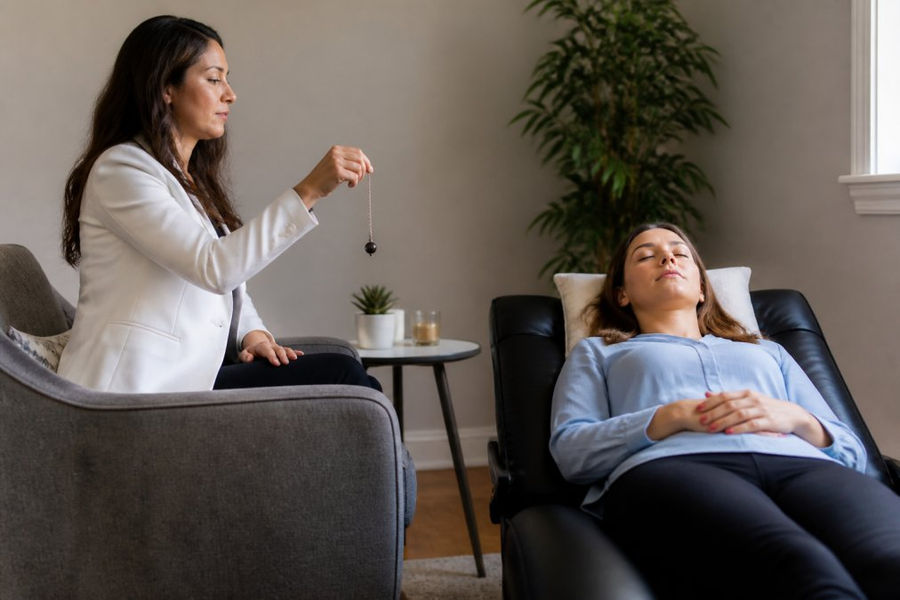
Nervous System Regulation Techniques in Hypnotherapy
Anxiety lives in your nervous system. Your thoughts alone didn't create it, and your thoughts alone won't fix it. That's why nervous system regulation is central to treating treatment-resistant anxiety.
Hypnotherapy uses several techniques to downregulate your nervous system:
Deep relaxation induction. The hypnotherapist guides you into progressively deeper states of physical relaxation. As your body relaxes, your nervous system interprets this as safety. Your heart rate slows. Your breathing deepens. Cortisol (stress hormone) levels drop.
Guided imagery. Your brain responds to mental imagery almost as strongly as it responds to real experience. Hypnotherapists use calming imagery, safe places, peaceful scenes, sensory details, to anchor your nervous system in a parasympathetic state.
Breathing and pacing. Many hypnotherapy sessions incorporate specific breathing patterns that activate the vagus nerve, the main nerve of the parasympathetic system. Slower, deeper breathing signals your body that the threat has passed.
Progressive muscle relaxation. Systematic relaxation of muscle groups helps release the physical tension that maintains anxiety. When your body is relaxed, your mind follows.
Anchoring techniques. Your therapist helps you create an internal "anchor", a word, image, or sensation you can access anytime to trigger the calm state you experience in hypnosis. This gives you a tool you can use outside the session.
The goal isn't to eliminate all stress response. That's not possible or healthy. The goal is to restore flexibility. Your nervous system should activate when there's real danger and return to calm when the threat passes. Anxiety disorders lose this flexibility. Hypnotherapy restores it.
Hypnotherapy Success Rates for Anxiety: What the Research Shows
The research on hypnotherapy for anxiety is growing. Many studies show significant symptom reduction, though the exact numbers vary depending on the population studied and how success is measured.
Research indicates that clinical hypnosis produces measurable improvements in anxiety symptoms for many people. The variation depends on factors like how deeply rooted the anxiety is, whether there's underlying trauma, and how quickly your subconscious mind responds to suggestion.
Hypnotherapy appears most effective when combined with other evidence-based approaches. This is why Alive Hypnotherapy uses a hybrid model that integrates cognitive behavioral therapy (CBT), neuro-linguistic programming (NLP), and hypnotherapy. Each approach addresses different layers of the anxiety response.
Important context: hypnotherapy works best for people who are willing to engage with the process. Your conscious skepticism won't prevent hypnosis from working, but active resistance will. The most successful clients are those who approach it with openness and a genuine desire to change.
The research also shows that results can be lasting. Hypnotherapy aims to produce lasting change by rewiring subconscious patterns, rather than just managing symptoms temporarily.
Hypnotherapy vs. Talk Therapy: Why Traditional Approaches Fall Short
Talk therapy, particularly cognitive behavioral therapy, is evidence-based and helpful for many people. It works by helping you identify anxious thoughts, challenge them logically, and gradually expose yourself to anxiety triggers.
This approach works well for some. But for those struggling with treatment resistant anxiety, talk therapy alone may not always provide the desired breakthrough.
Why? Because anxiety isn't always a thinking problem.
When your nervous system is dysregulated, when your body is stuck in fight-or-flight mode, no amount of logical reasoning will convince your amygdala (the fear center of your brain) that you're safe. You can intellectually know you're not in danger while your body floods with adrenaline anyway. That's the gap talk therapy can't always bridge.
Talk therapy also works primarily through conscious processing. You talk about your anxiety, analyze it, understand its origins. This is valuable. But the automatic anxious response lives in your subconscious. Your conscious mind isn't running the show.
Hypnotherapy accesses the subconscious directly.
What to Expect During Your First Hypnotherapy Session
Your first session is typically 60-90 minutes. Here's what happens.
Approach | How It Works | Best For | Timeline |
Talk Therapy | Identifies anxious thoughts and challenges them logically | Mild to moderate anxiety, thought-based patterns | Varies |
Medication | Adjusts brain chemistry to reduce anxiety symptoms | Moderate to severe anxiety, co-occurring conditions | Ongoing management |
Hypnotherapy | Rewires subconscious beliefs and regulates nervous system | Treatment-resistant anxiety, deep-rooted patterns | Results in weeks, not years |
Hybrid (Hypnotherapy + CBT) | Combines conscious skill-building with subconscious rewiring | Treatment-resistant anxiety with complex history | Results in weeks, not years |
Pro Tip The most overlooked difference between hypnotherapy and talk therapy: talk therapy teaches your conscious mind new ways to think about anxiety. Hypnotherapy teaches your nervous system that you're actually safe. One is intellectual. The other is physiological. For treatment-resistant anxiety, the physiological shift often matters more.
Watch Out Not all hypnotherapists are equally trained in anxiety treatment. Look for practitioners certified in clinical hypnosis who have specific experience with treatment-resistant anxiety and trauma. The difference between a skilled practitioner and an untrained one is significant.
Frequently Asked Questions
Can hypnotherapy actually help treatment-resistant anxiety when nothing else has worked?
Yes. Hypnotherapy accesses the subconscious mind where anxiety patterns originate, allowing practitioners to identify and rewrite the beliefs driving your symptoms. Unlike talk therapy alone, this approach targets root causes rather than managing surface-level anxiety. Many individuals with treatment-resistant anxiety respond well because hypnotherapy works through a different neurological pathway, one that bypasses conscious resistance and directly addresses the autonomic nervous system's anxiety response.
How many hypnotherapy sessions do I need to see results for treatment-resistant anxiety?
Many individuals experience meaningful shifts, though timelines vary based on anxiety severity and how long symptoms have persisted. Some experience relief sooner; others benefit from additional sessions to solidify changes. Hypnotherapy aims for results in weeks rather than years. Your practitioner will assess your progress and recommend a personalized plan during your initial consultation.
Is hypnotherapy for anxiety backed by scientific evidence?
Yes. Clinical research supports the use of hypnotherapy for anxiety. Studies indicate it can help reduce anxiety symptoms, lower cortisol levels (the stress hormone), decrease physiological arousal, and improve emotional resilience. Hypnotherapy aims to strengthen neuroplasticity, your brain's ability to form new neural pathways, which can contribute to lasting subconscious pattern changes.
BOOK YOUR BREAKTHROUGH CALL


Comments